Australian Winter Horse Rugging Guide

Winter has a way of making horse owners second-guess themselves. Is that shiver just a twitch? Should I add another layer? Is the rug I put on last night actually doing anything?
You're not overthinking it. Knowing whether your horse is genuinely warm is one of those things that looks simple but takes a bit of practice to get right.
Here's what to look for — and how to think about rugging through the cooler months.
Check the Right Spots First
A cold ear doesn't always mean a cold horse. Ears are exposed and will feel cool even on a mild day.
The more reliable places to check are the base of the neck, across the back, and just behind the shoulder. If those areas feel cold under the rug, your horse needs more warmth. If they're warm through the body but the flanks are cool, it may be a fit issue rather than a weight issue.
Signs Your Horse Is Cold
- Shivering (obvious, but don't wait for this before you act)
- Hunching up or tucking the tail
- Looking dull or flat in energy
- Stiff movement, especially first thing in the morning
- Reluctance to move away from shelter
Older horses and horses with tight or stiff muscles tend to feel the cold more. If your horse has arthritis or a history of muscle soreness, they'll notice the temperature drop before the others in the paddock do.
Which Rug, and When
This is the part that trips most people up — and as a horse rugging guide for Australian conditions, it's worth noting that our winters vary enormously by region. A Queenslander's "cold" is not the same as a Victorians.
As a general starting point:
- 18°C+ — most horses go without a rug or with a light cotton rug
- 12–18°C with rain — this is when most people reach for a canvas or turnout rug to keep their horse dry
- 8–12°C — an under rug starts to make sense here, particularly overnight
- Below 12°C — time to layer up; some horses will need this combination during the day, most will need it at night
Clipped horses, horses in regular work, and horses that are stabled will need rugging earlier than a fully-coated paddock horse. Trust what you see in front of you, not just the thermometer.
For Horses That Stiffen Up in the Cold
This is where Welltex technology genuinely makes a difference.
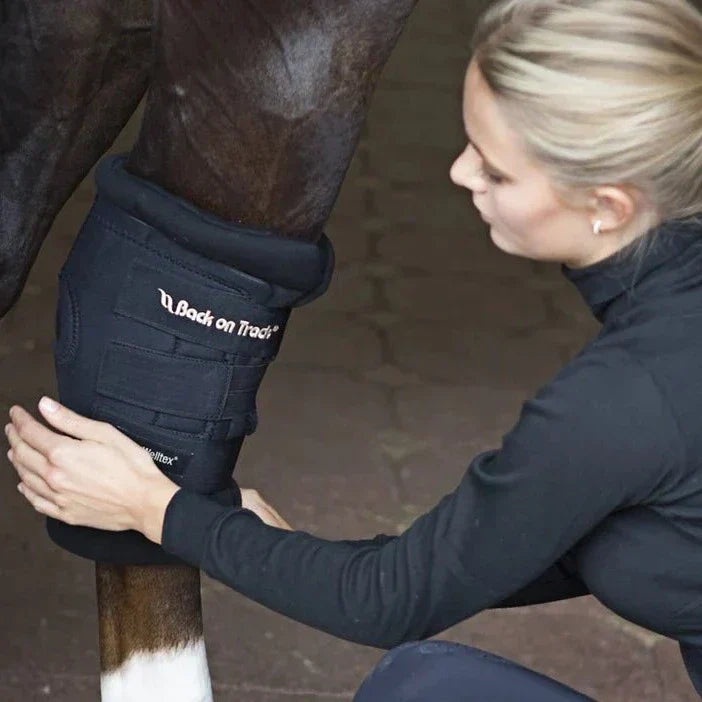
The Back On Track Horse Mesh Rug is made with Welltex fabric, which reflects your horse's own body heat back as far-infrared energy. It increases blood circulation and helps muscles warm through properly.
It's not a replacement for a warm rug in cold weather. It's best used before or after exercise, left on for 30 minutes to overnight, or layered underneath a turnout rug in the paddock. If yours tends to be stiff first thing, this is worth having in the rotation.
The Deluxe Royal Horse Mesh Rug is the newer version of the Mesh Rug, with several design improvements. It has an anatomical fit with T-buckles at the front, a soft fleece collar to reduce chafing, and practical flat buckles on the inside. Better fit means better results from the Welltex fabric.
Both rugs are available with a matching Mesh Neck Rug for full coverage.
Keeping Warm During Work
If your horse gets worked and then stands around cooling down, they can lose heat fast — especially in winter mornings.
The Back On Track Exercise Sheet sits over the hindquarters while you ride, using Welltex fabric to keep the back and hindquarters warm throughout the session. It stays in place with a strap under the saddle and has reflective strips for early morning or evening rides. It also works well during warm-up, lunging, or as a cooler after exercise.
Protecting Against the Wet
In a lot of Australian winters, rain is the bigger issue than cold.
The Classic Turnout Rain Rug is made from 600D denier fabric — waterproof, durable, and built for paddock life. A wet horse loses body heat quickly, so keeping them dry goes a long way toward keeping them warm.
For horses that need an extra layer, the Supreme Fleece Horse Rug works well as a stable rug, for travel, or as an under rug beneath a heavier turnout. It's made with Welltex fabric and has a rounded neck and reinforced wither for fit and comfort.
A Note on Shoulder Rubs
Heavy winter rugs worn for long periods can cause rubbing around the shoulder and chest. The Therapeutic Horse Shoulder Guard with Pads from Back On Track sits underneath the rug and protects those pressure points. The removable pads let you adjust coverage depending on the rug you're using.
The Short Version
Every horse is different. An older horse, a clipped horse, or one that runs lean is going to need more warmth than a native breed with a thick coat doing light work.
Check behind the shoulder, across the back, and at the base of the neck. Those areas tell the truth. Layer up based on what you feel, not just what the forecast says.
If you're not sure which rug is right for your horse this winter, feel free to reach out — We're happy to help you work it out.